
Your Breeding Story Starts Here
The technical infrastructure for collection management. Manage records, track lineage, and structure your breeding data, all in one place. Completely free.
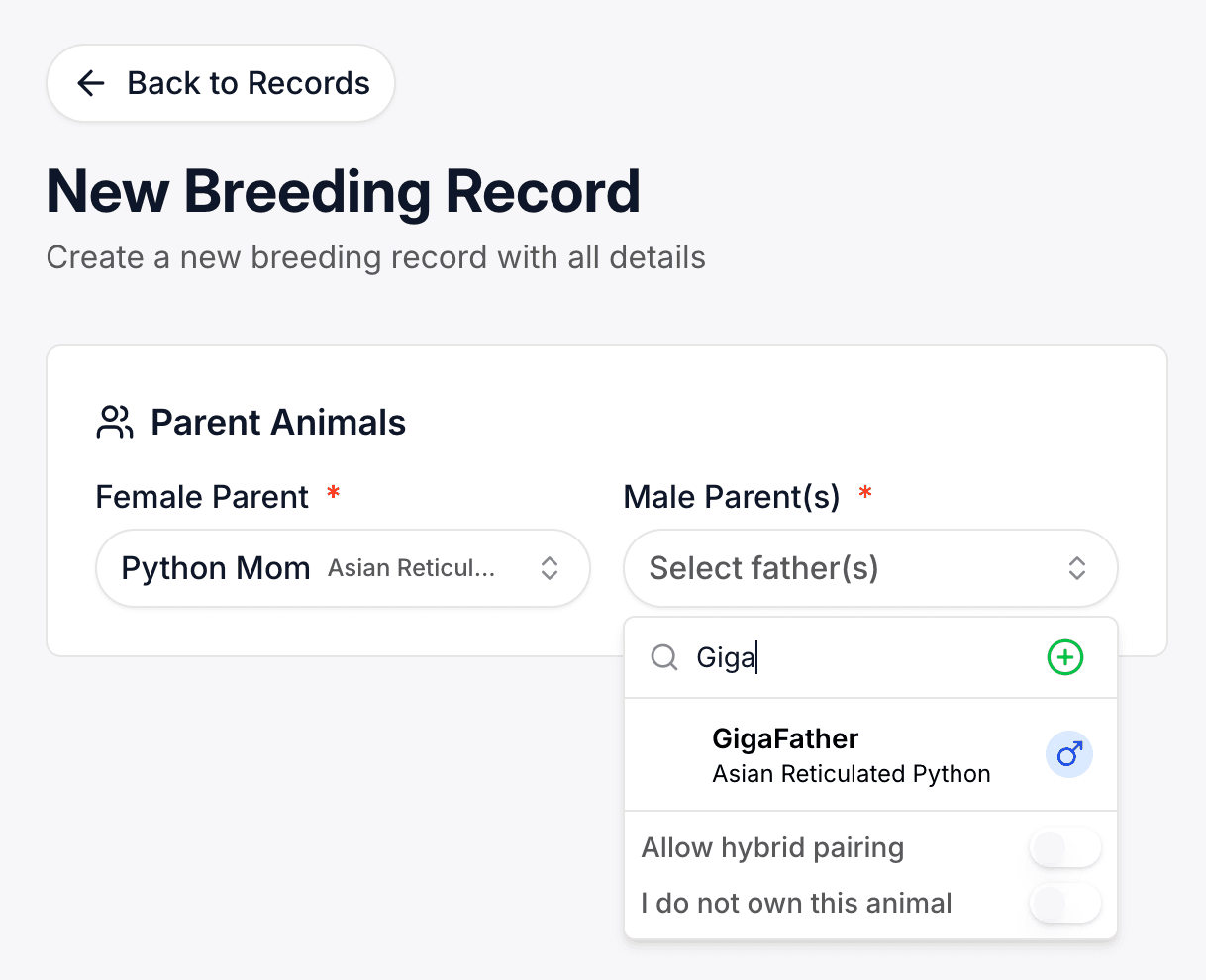
Pair & Track
Select parents from your collection and record mating dates. Species-specific validation ensures the structural integrity of your data entries.
- Access individual records
- Species-specific validation
- Record standardized mating dates
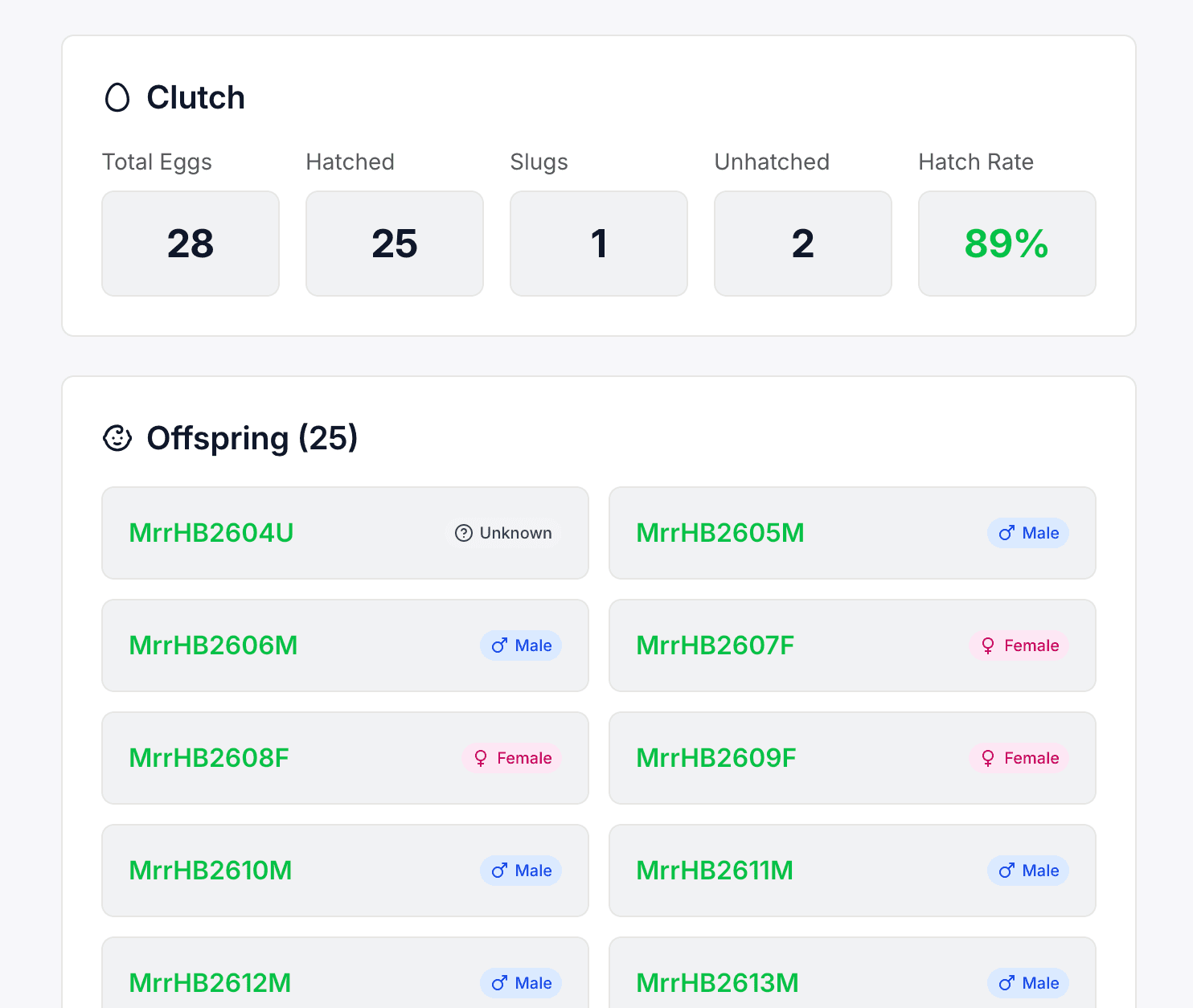
Hatch & Record
Document offspring sizes, hatch rates, and incubation temperatures. The system provides structured data for existing breeder expertise.
- Log offspring outcomes
- Automated data generation
- One stop shop for all your notes
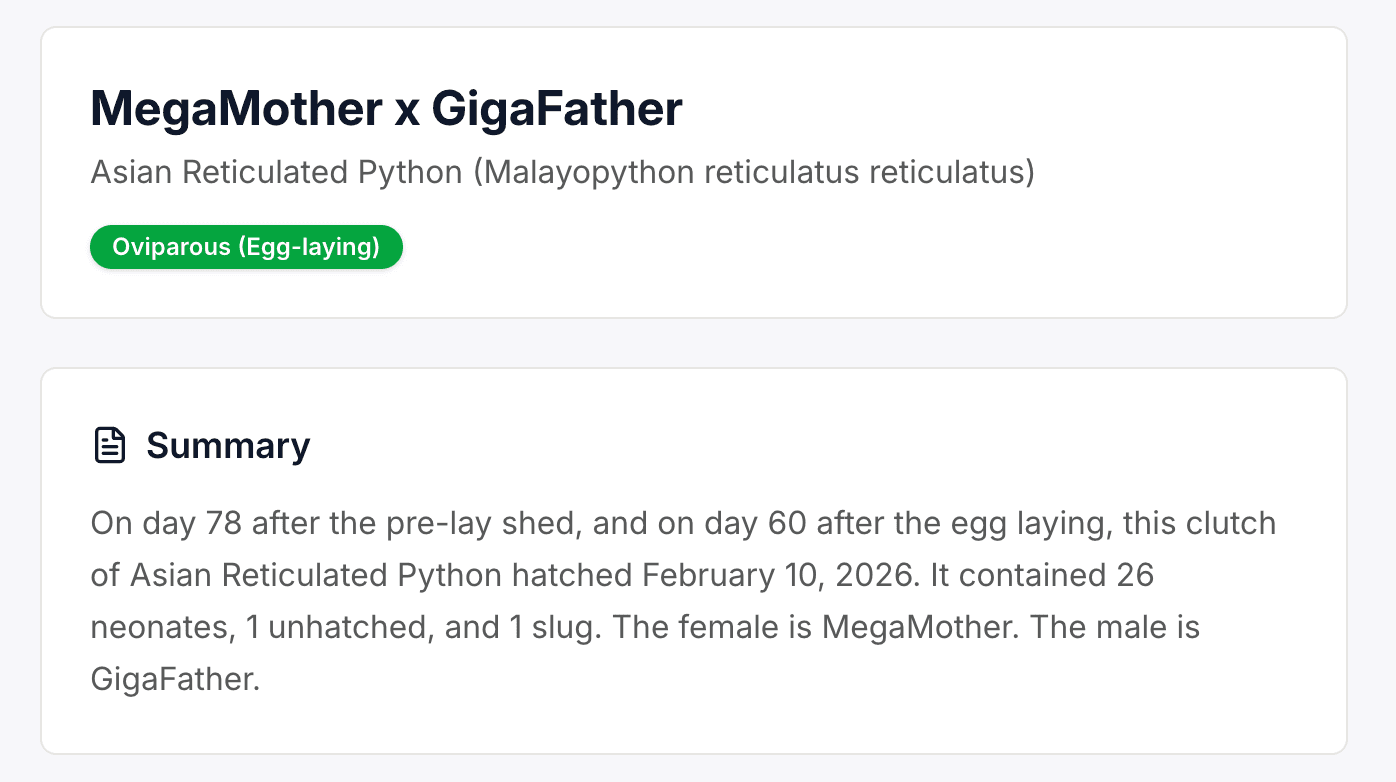
Grow & Analyze
Standardized summaries and timeline views provide the technical architecture to carry your collection records forward.
- AI-powered breeding summaries
- Timeline & status tracking
- Register offspring automatically
Ready to document your collection?
Create structured breeding records and maintain verified lineage data in one platform.
Join NowWhat a TruGenix breeding record actually holds
Breeding data is only useful if it survives the season it was written in. These are the fields behind every pairing you record, and the reasoning behind each one.
One female, however many males
A pairing records the female and every male involved, not a single sire chosen for tidiness. Multi-sire clutches are common and guessing at paternity afterwards is how lineage data goes wrong, so the record keeps what actually happened and lets a genetic test settle paternity later if it matters.
The dates that decide a season
A record holds the pairing window with its start and end, the post-ovulation shed, the lay date and the outcome date. The post-ovulation shed in particular is the date breeders reconstruct from memory every year, and it is the one that tells you when to expect eggs.
Clutch numbers that separate the failures
Total, hatched, failed, deformed, fertile eggs and infertile eggs are counted separately, alongside the incubation temperature. A clutch of twelve with four slugs is a different result from a clutch of eight, and only the split tells you whether the problem was fertility or incubation.
Offspring become animals in one step
When a clutch hatches, the offspring are registered as animals and stay linked to the clutch they came from. Each one inherits its parents, so the ancestry of your collection extends itself as you record the season rather than in a data entry session afterwards.
A record you can hand to a buyer
A breeding record can be published at its own address and shared with anyone, with a separate set of public notes so you decide what leaves your account. It gives a buyer the pairing, the dates and the clutch outcome behind the animal they are looking at, without them needing a TruGenix account.
Free to use
Breeding records cost nothing. Genetic tests are the only thing you pay for, and only when you order one.